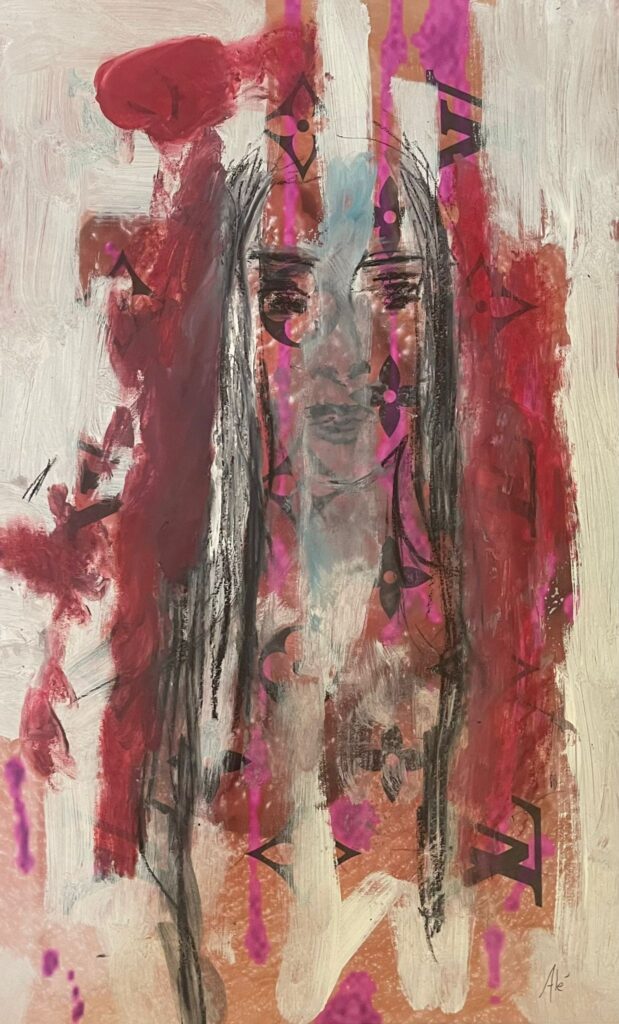
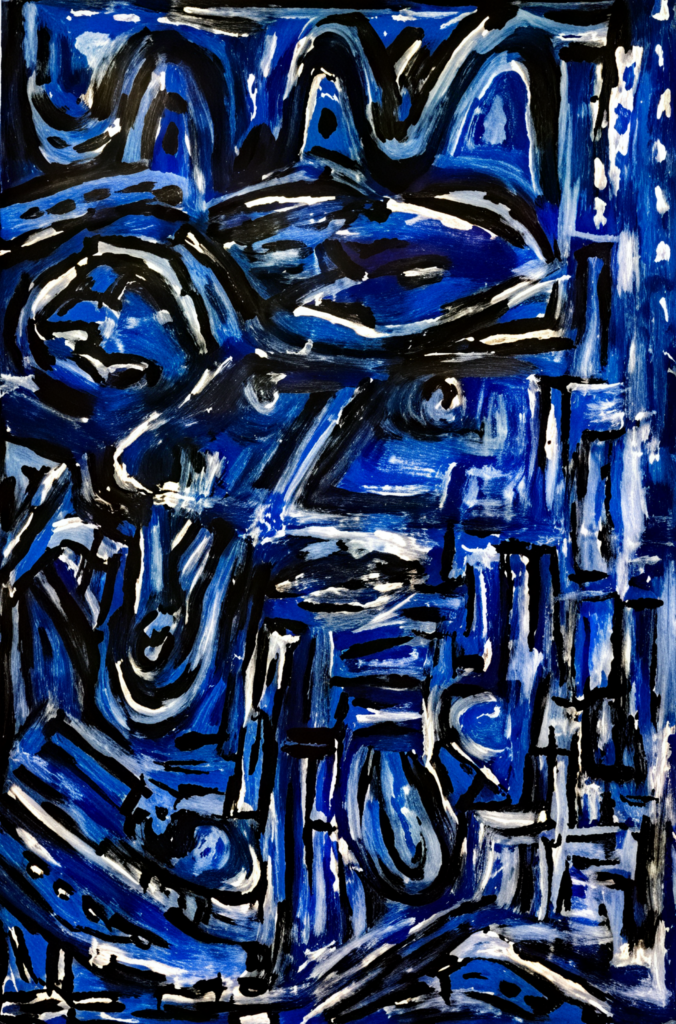
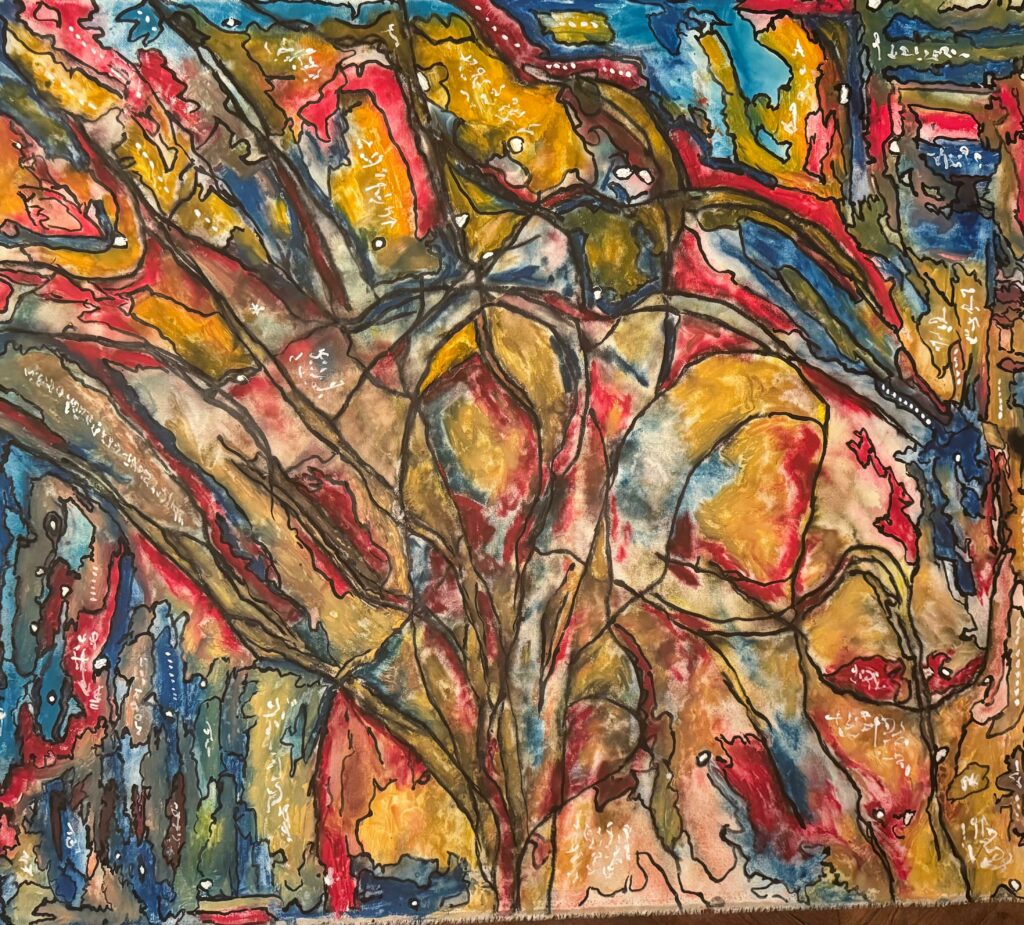
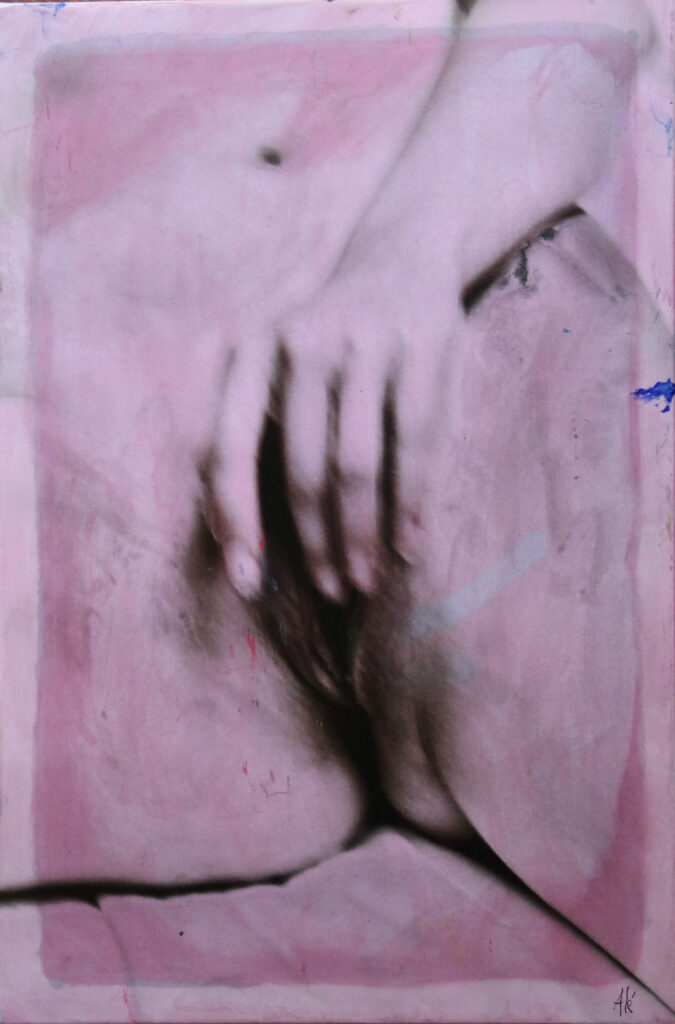
Ale de Basseville’s painting stands at the intersection of myth, tension and embodied experience. His canvases are not composed images but sites of collision where gesture, matter and memory interfere with one another. His technique, dry pigments diluted with water and layered beneath vinyl paint, creates a friction between the ancestral and the engineered, a dialogue between origins and the industrial present.
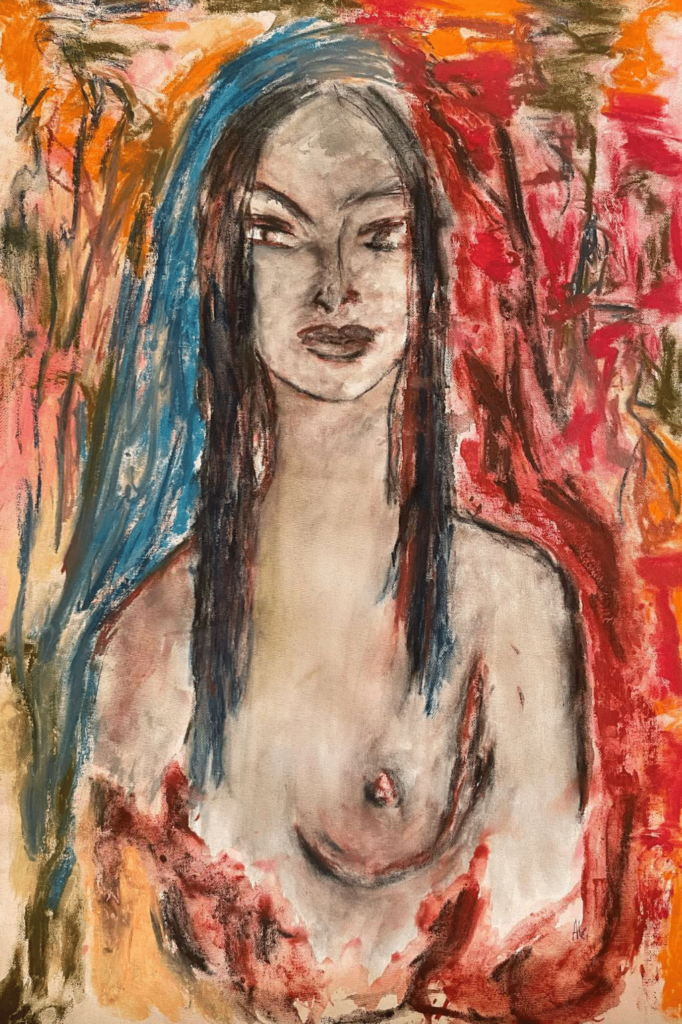
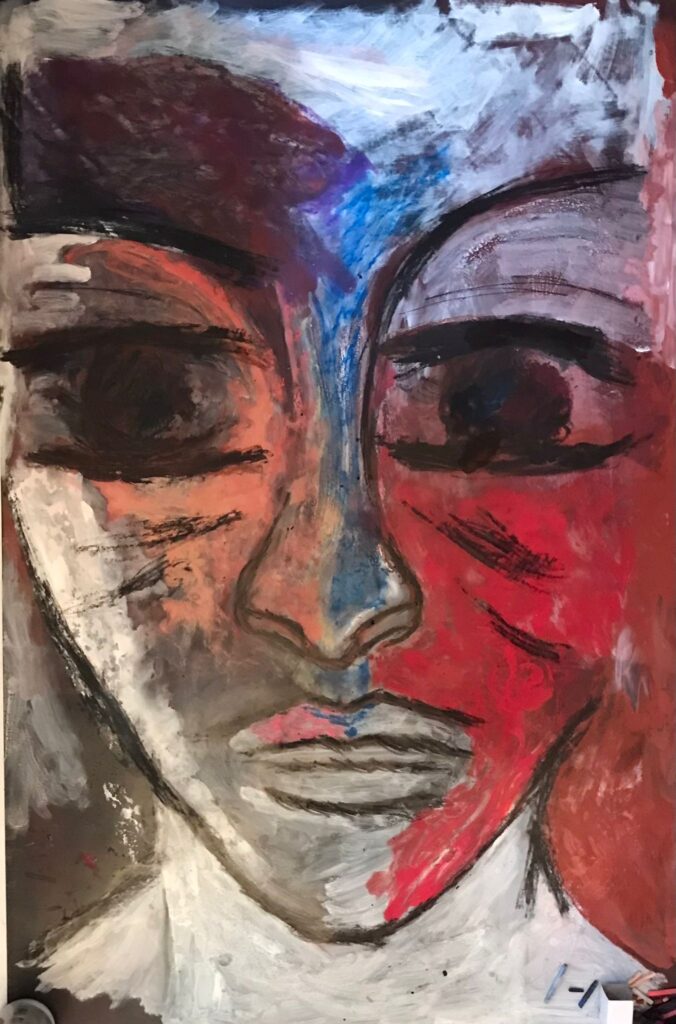
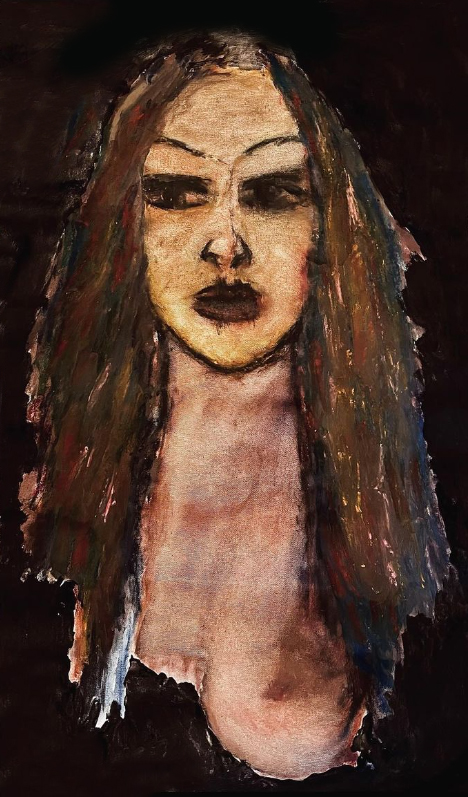
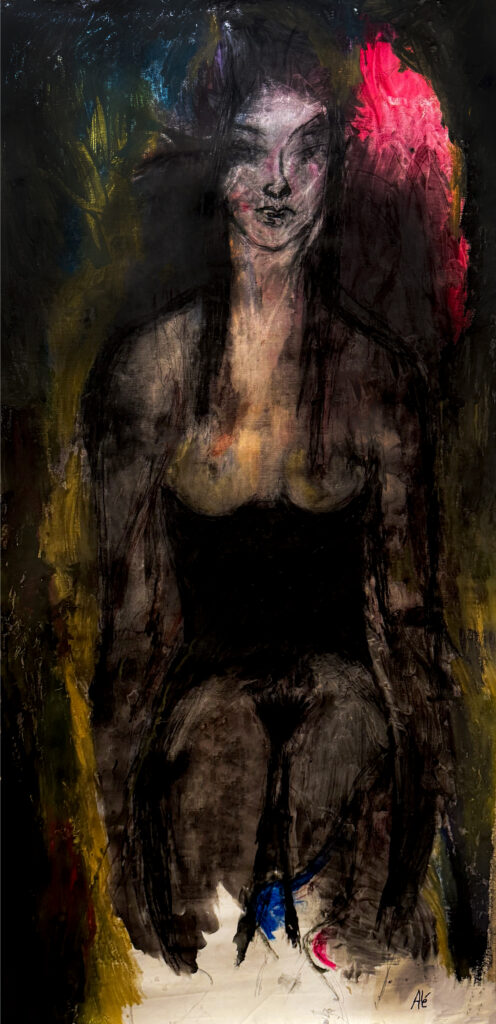
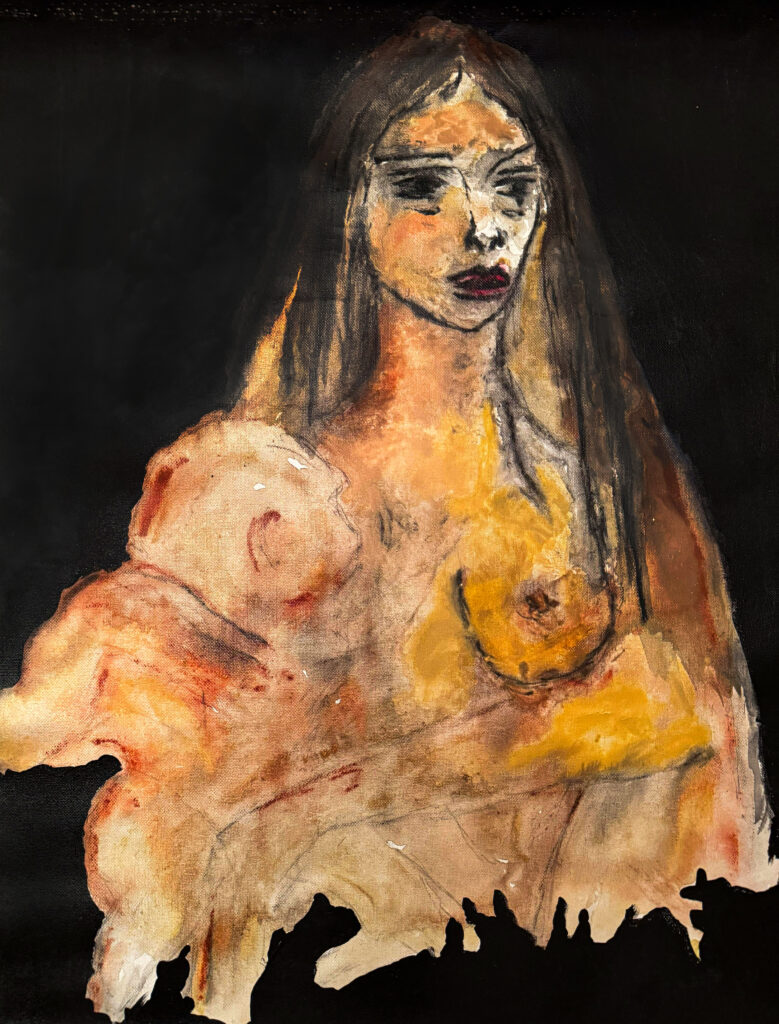
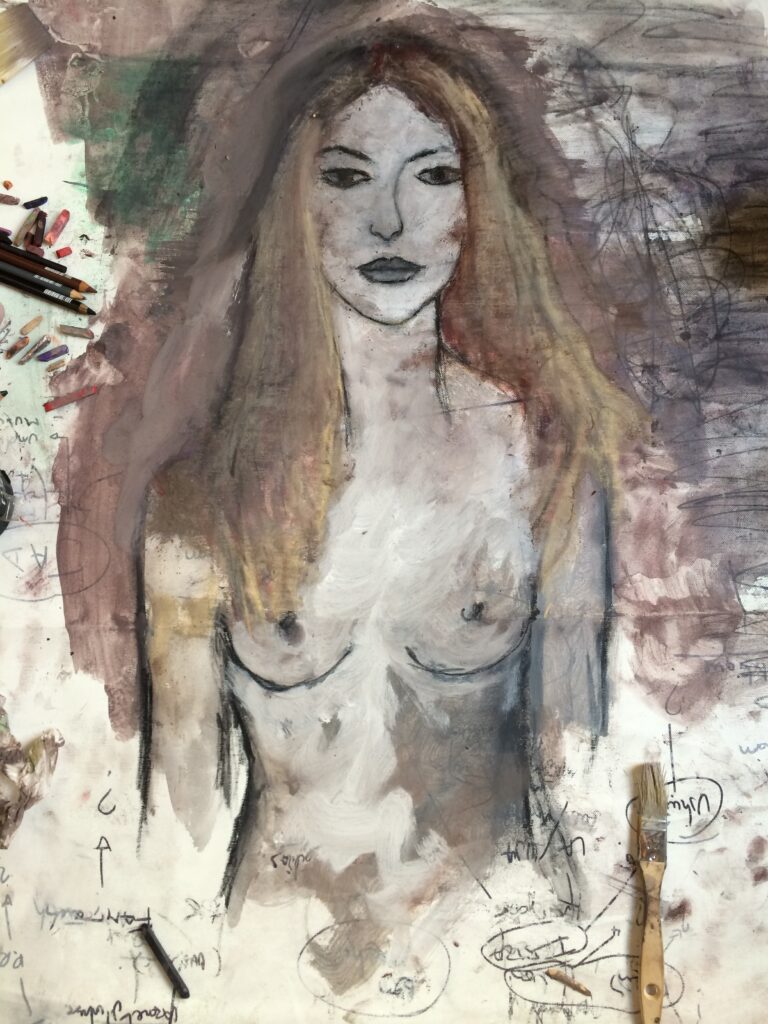
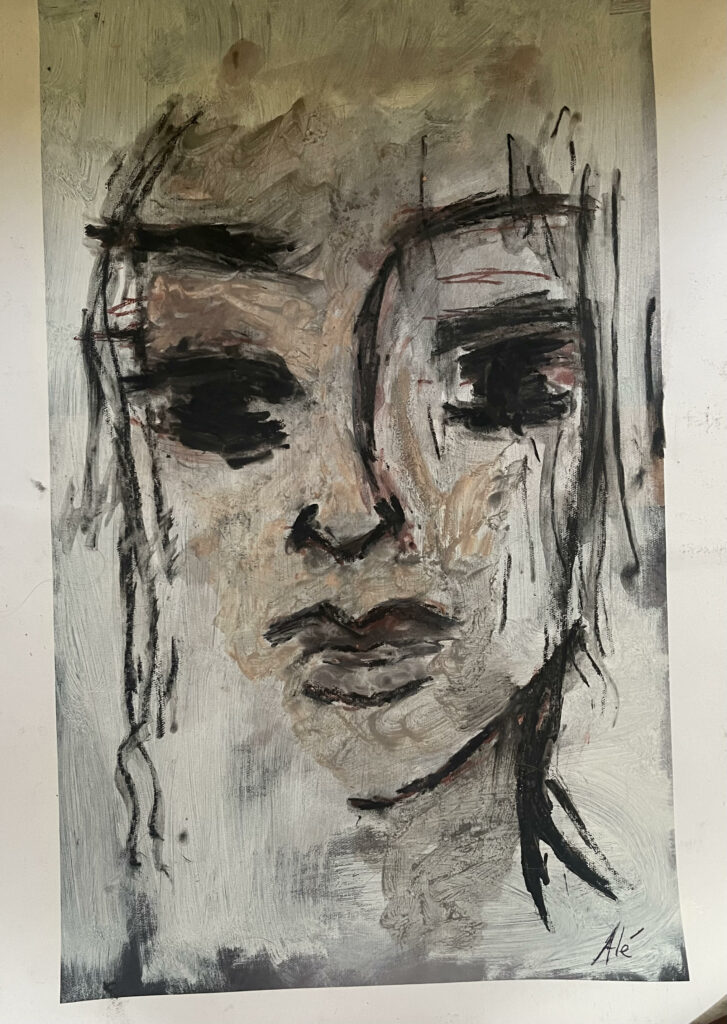
His figures, when they appear, rise and dissolve simultaneously. They are not portraits but emergences, silhouettes pulled out of the material and reabsorbed by it. This instability is intentional. It stages the uncertainty of identity, the persistence of memory and the violence of erasure that runs through the political and psychological history he carries.
This entire visual language is anchored in the way he paints: seated on the ground, by choice, in full immersion. The canvas becomes a territory rather than a surface, something he enters rather than observes. There is no vertical distance, no supervisory gaze. He works within the field, not above it, and this physical posture aligns with the philosophy of his practice. He never looks back, because the work does not emerge from detached contemplation; it emerges from direct confrontation. Presence replaces oversight. Immersion replaces evaluation. The gesture becomes an event, not a technique.
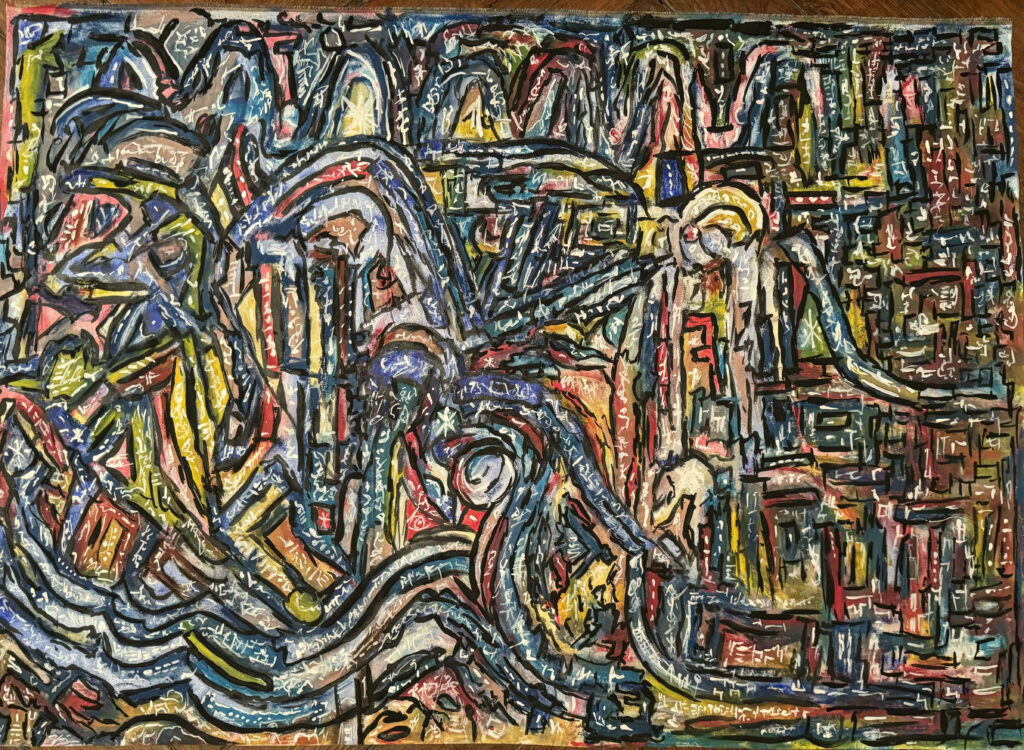
Across his œuvre, recurring shapes, labyrinthine lines, ruptures, burns and silhouettes of flame or shadow form a vocabulary of survival. They echo inner revolt, mythic memory, the tangled structures of identity and the scars left by both personal and historical forces. Nothing in his painting is ornamental. Everything is a trace of impact, what touches, what breaks, what insists.
Placed within the landscape of contemporary art, de Basseville’s work resists polite abstraction and market-driven polish. It aligns with post-war existential energy, Austrian expressionism and the metaphysical intensity of early Renaissance chiaroscuro, yet it refuses any stylistic inheritance. Instead, it constructs its own terrain, where myth and machinery intersect, where bodies and histories fracture and where origin and rupture coexist.
Ultimately, Ale de Basseville does not paint pictures. He paints conditions of fire, of resistance, of being. His canvases are not answers. They are events that continue to unfold long after the paint has dried.