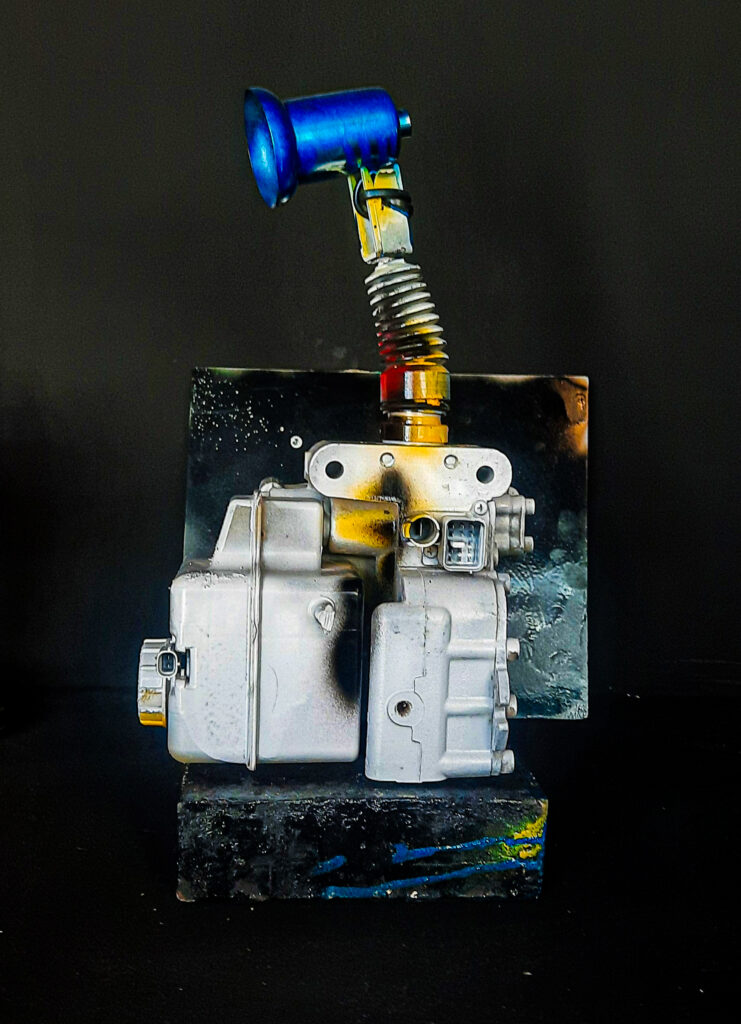
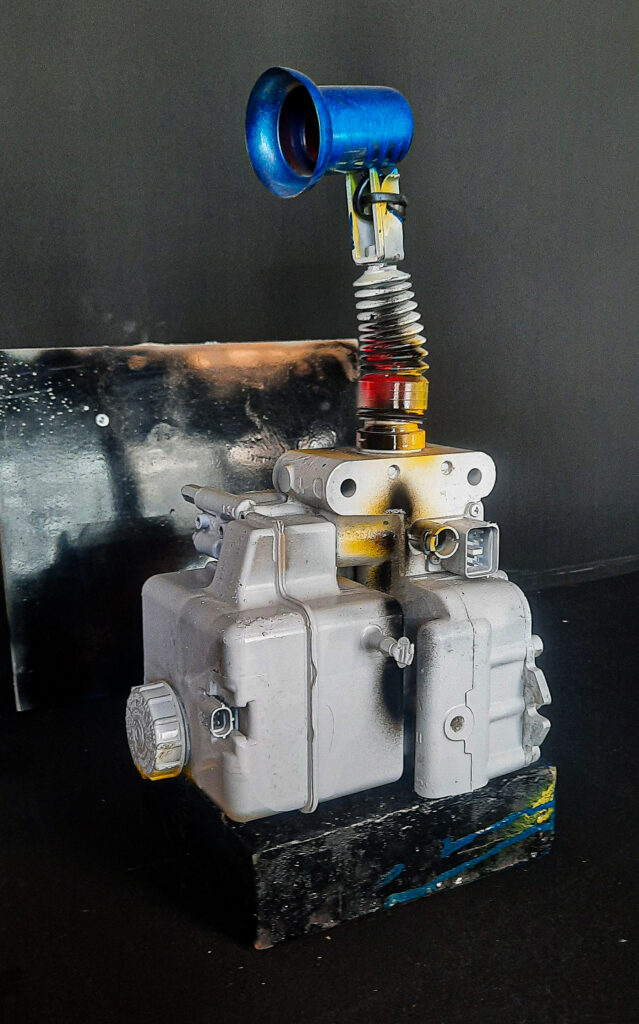
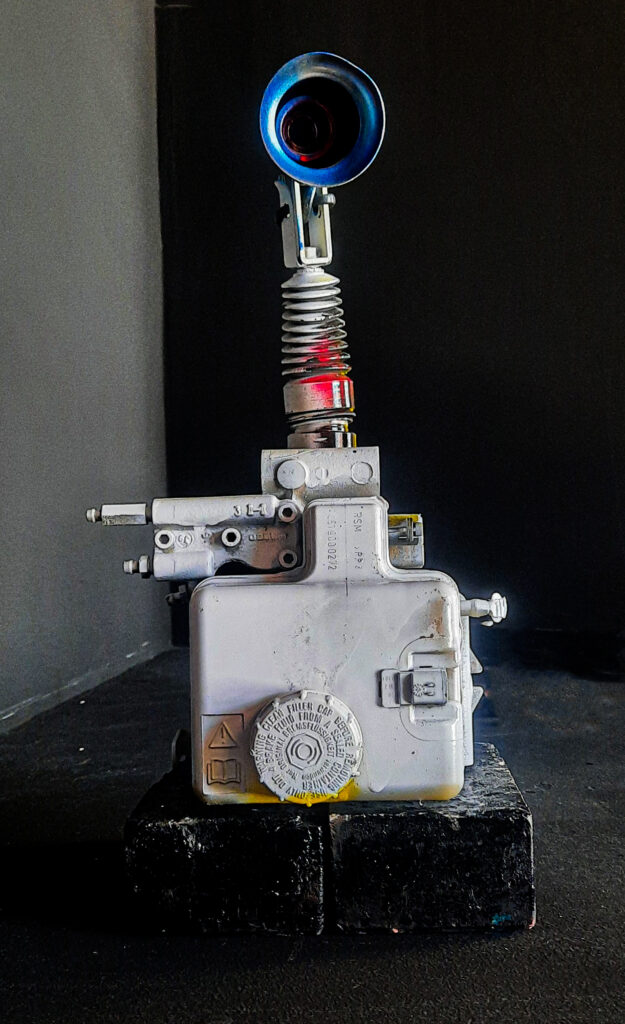
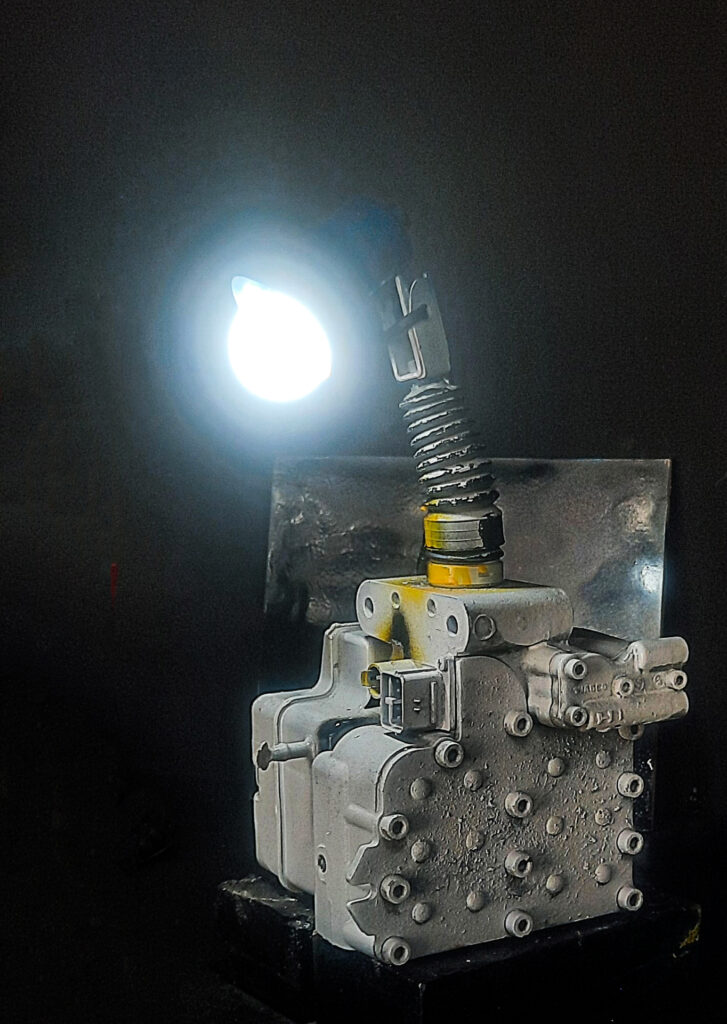
Mixed media assemblage (recycled industrial components, paint, light)
32X15X12
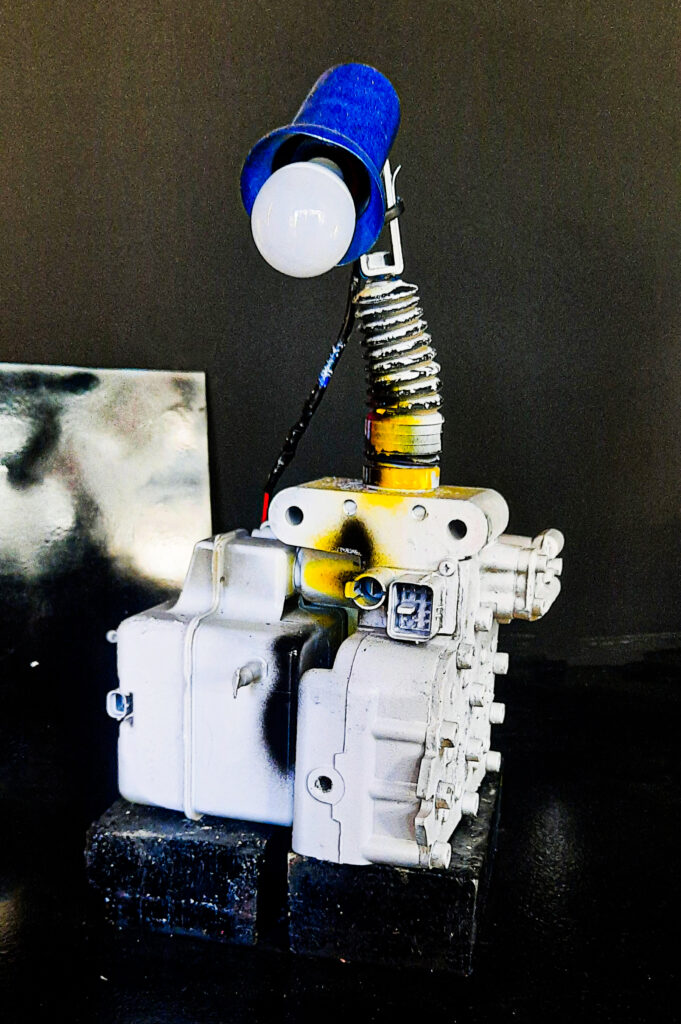
In this work, Ale de Basseville confronts the aesthetics of the Technology Era. By assembling discarded mechanical parts into a sculptural figure, he exposes the hidden anatomy of the machines that shape contemporary life. Every screw, scar, and worn surface is preserved to reveal the invisible labour of the technological systems we rely on but rarely notice.
The blue cone rises like a sensor or digital eye; the compressed spring suggests a spine engineered for perpetual tension. The white industrial body becomes an artifact of modern production—anonymous, functional, and strangely vulnerable.
De Basseville’s assemblage reflects the paradox of our age: a world driven by innovation yet saturated with technological debris. His sentinel stands as both guardian and witness, embodying the tension between creation and obsolescence, progress and abandonment.
In the heart of the Technology Era, this work asks a simple question: What becomes of the machines once they stop serving us—and what do they say about who we have become?
Red shift
Mixed media assemblage (industrial metal sheets, crushed steel, wiring, red-coated mechanical components)
78x52x16
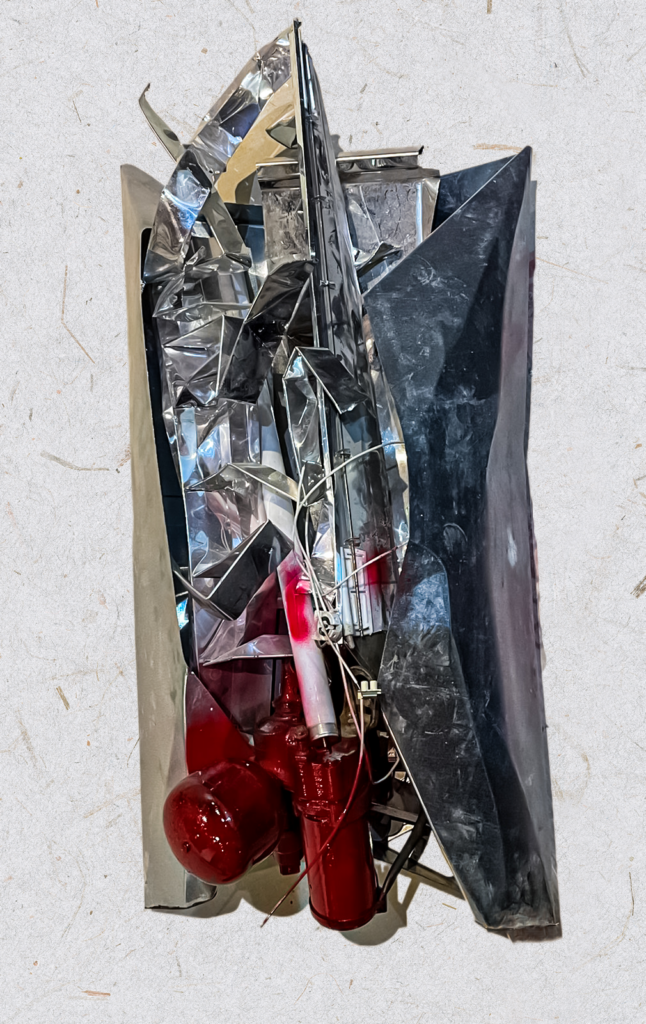
In this sculptural assemblage, Ale de Basseville confronts the violence and fragility embedded in the Technology Era. The work is built from crushed metal sheets, fractured geometries, and reassembled mechanical remnants — a composition that oscillates between collapse and resistance. The red-coated industrial parts at the base introduce a pulse, a warning, or a rupture: the colour of malfunction, urgency, and transformation.
De Basseville treats technological debris as archaeological matter. The creased metallic planes evoke the aftermath of impact, while the wires and dismantled components suggest systems severed from their original purpose. Rather than restoring these materials, he preserves their damage as evidence — a testament to the hidden cost of progress.
Red Shift stands as a relic of technological acceleration: a collapsed structure that still radiates energy, a fragment of a world moving too fast to remember what it leaves behind.
Through this work, de Basseville invites viewers to examine the threshold between innovation and entropy — and to recognise that every era of technology produces its own ruins.
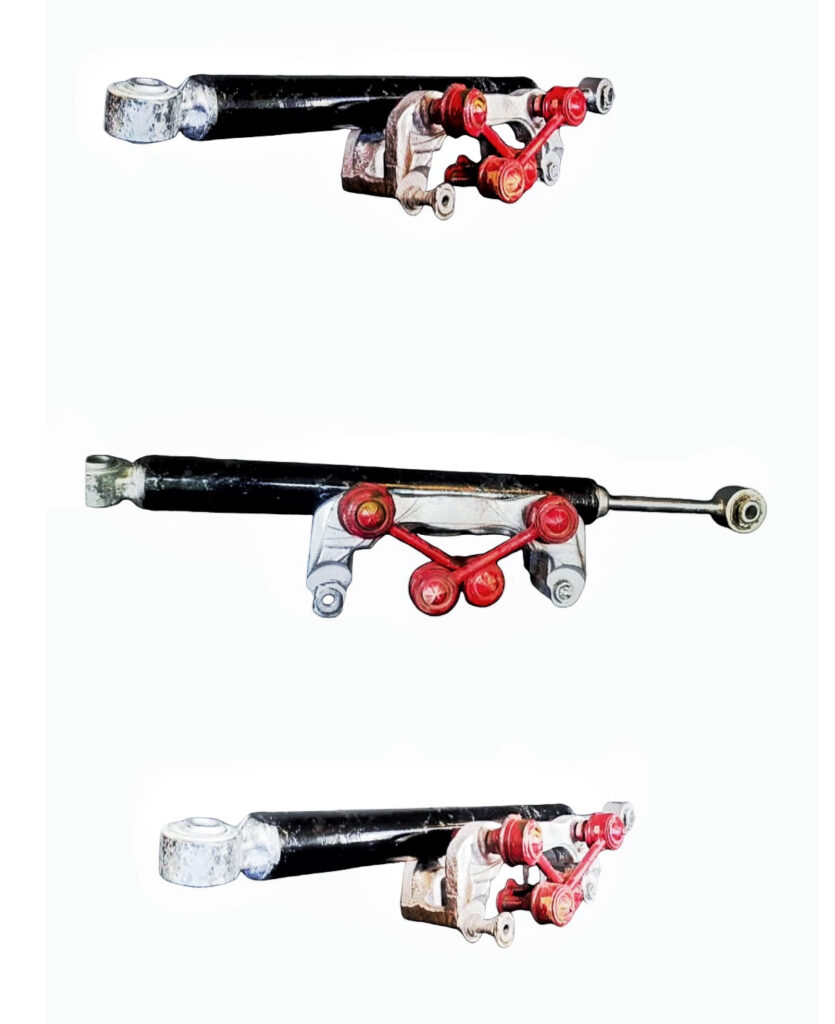
In this sculptural fragment, Ale de Basseville isolates a single mechanical structure and presents it as a relic of the Technology Era. The articulated metal arm — once part of a functional system — is suspended in stillness, revealing the hidden anatomy of industrial motion.
The red joints evoke a mechanical ligament, suggesting the convergence of engineered mechanics and biological form. By preserving the object’s wear and utilitarian scars, de Basseville transforms discarded machinery into a witness of the systems that shape contemporary life.
Neither tool nor abstraction, the piece stands as a trace of movement that persists even after function has disappeared.
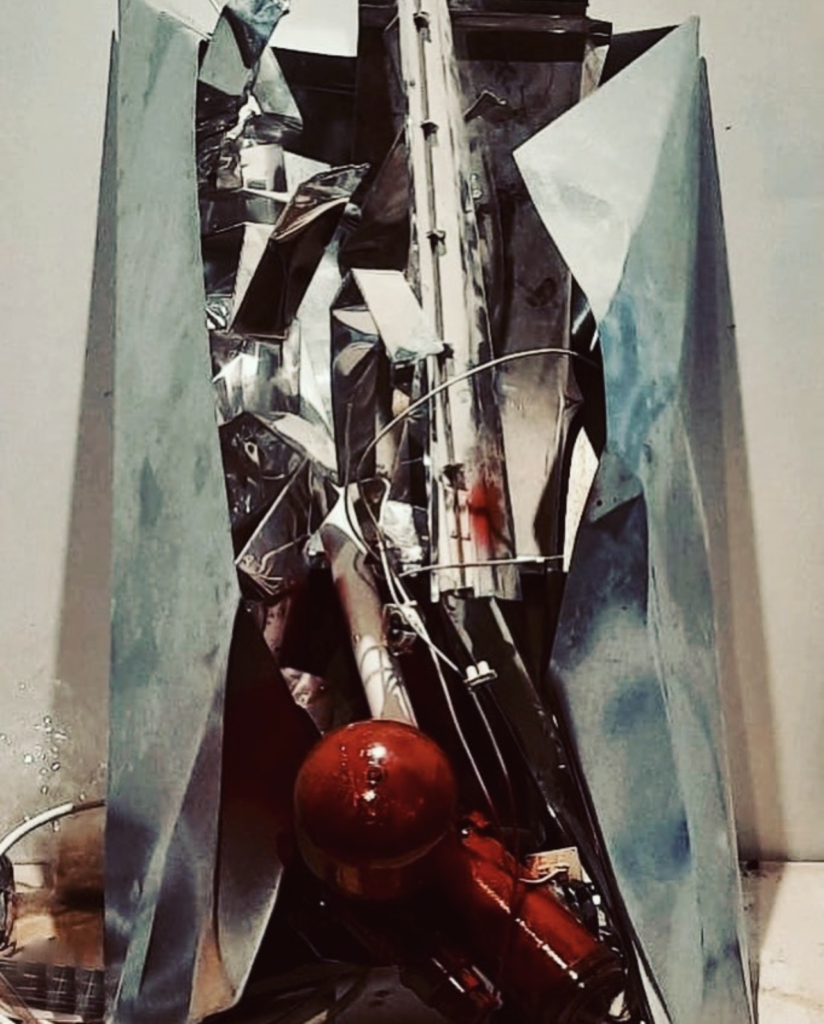
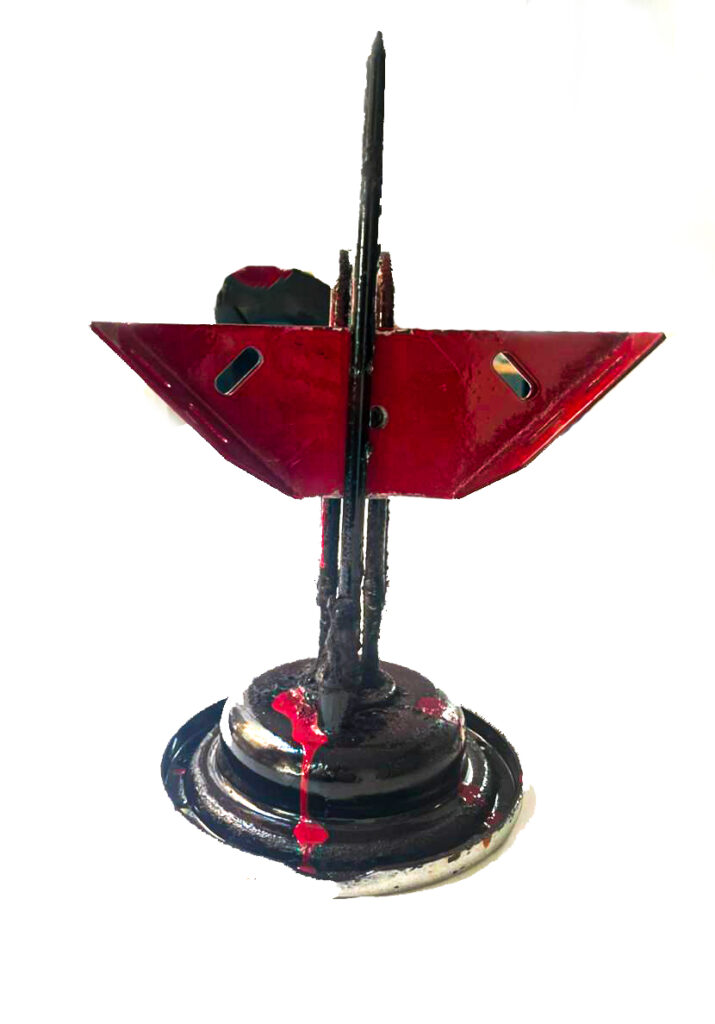
In Iron Sacrifice, Ale de Basseville transforms industrial debris into a sculptural ritual. A vertical steel blade rises from a dense mechanical base, its presence dividing the red angular plates like an offering placed upon an altar. The composition suggests a gesture of surrender or resistance, a moment when material becomes more than function and steps into the realm of symbol.
The enamel red that drips across the surface evokes both vitality and violence, hinting at the cost embedded in every act of creation, extraction, or transformation. Rather than conceal the scars and distortions of the metal, de Basseville elevates them, allowing the work to bear witness to the pressures that shaped it before its reconfiguration as art.
Iron Sacrifice reflects the artist’s ongoing exploration of the Technology Era as a landscape of both progress and rupture. Here, the industrial object becomes a totem of endurance, a reminder that behind every constructed world lies a moment of breaking, offering, or release.
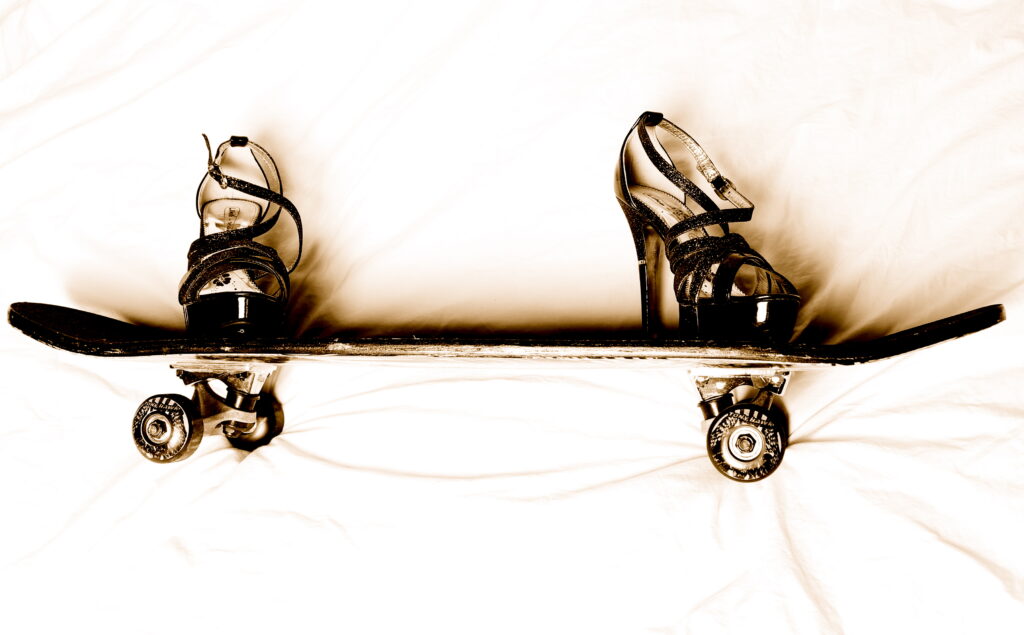
In Femme en Équilibre, Ale de Basseville exposes the contradictions imposed on the feminine body by contemporary culture. By mounting stiletto heels onto a skateboard, an object associated with speed, risk and rebellion, he creates a sculptural provocation. The structure looks poised to move yet is fundamentally designed to destabilise anyone who attempts to stand on it.
The work merges two symbols of performance into a single impossible requirement. The stiletto, traditionally tied to beauty, control and seduction, becomes a trap when fixed to a board built for falls, impact and abrasion. De Basseville highlights how society asks women to embody elegance while navigating terrains engineered for collision, to remain composed in environments that never considered their safety or liberation.
The sculpture is intentionally unwearable. Its dysfunction is the statement. It confronts the absurdity of expectations placed on women: to balance under pressure, to maintain poise on instability, to demonstrate power through structures that work against them.
Femme en Équilibre becomes a feminist critique shaped through industrial irony. It reminds us that cultural tools often demand the impossible, and that refusal itself can be a form of balance.